Plastics are a wide range of synthetic or semi-synthetic materials that use polymers as a main ingredient. Their plasticity makes it possible for plastics to be moulded, extrudedor pressed into solid objects of various shapes. This adaptability, plus a wide range of other properties, such as being lightweight, durable, flexible, and inexpensive to produce, has led to its widespread use. Plastics typically are made through human industrial systems. Most modern plastics are derived from fossil fuel-based chemicals like natural gas or petroleum; however, recent industrial methods use variants made from renewable materials, such as corn or cotton derivatives.[1]
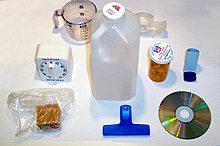
In developed economies, about a third of plastic is used in packaging and roughly the same in buildings in applications such as piping, plumbing or vinyl siding.[2] Other uses include automobiles (up to 20% plastic [2]), furniture, and toys.[2] In the developing world, the applications of plastic may differ; 42% of India's consumption is used in packaging.[2] In the medical field, polymer implants and other medical devices are derived at least partially from plastic. Worldwide, about 50 kg of plastic is produced annually per person, with production doubling every ten years.
The world's first fully synthetic plastic was Bakelite, invented in New York in 1907, by Leo Baekeland,[3] who coined the term "plastics".[4] Dozens of different types of plastics are produced today, such as polyethylene, which is widely used in product packaging, and polyvinyl chloride, used in construction and pipes because of its strength and durability. Many chemists have contributed to the materials science of plastics, including Nobel laureate Hermann Staudinger, who has been called "the father of polymer chemistry" and Herman Mark, known as "the father of polymer physics".[5]
The success and dominance of plastics starting in the early 20th century has caused widespread environmental problems, due to their slow decomposition rate in natural ecosystems. Toward the end of the 20th century, the plastics industry promoted recycling in order to assuage environmental concerns while continuing to produce virgin plastic. The main companies producing plastics doubted the economic viability of recycling at the time, and this is reflected in contemporary plastic collection. Plastic collection and recycling is largely ineffective because of the complexity of cleaning and sorting post-consumer plastics. Most plastic produced has not been reused, either being captured in landfills or persisting in the environment as plastic pollution. Plastic pollution can be found in all the world's major water bodies, for example, creating garbage patches in all of the world's oceans and contaminating terrestrial ecosystems.
Etymology
The word plastic derives from the Greek πλαστικός (plastikos) meaning "capable of being shaped or molded," and in turn from πλαστός (plastos) meaning "molded."[6] As a noun the word most commonly refers to the solid products of petrochemical-derived manufacturing.[7]
The noun plasticity refers specifically here to the deformability of the materials used in the manufacture of plastics. Plasticity allows molding, extrusion or compression into a variety of shapes: films, fibers, plates, tubes, bottles and boxes, among many others. Plasticity also has a technical definition in materials science outside the scope of this article referring to the non-reversible change in form of solid substances.
Structure
Most plastics contain organic polymers.[8] The vast majority of these polymers are formed from chains of carbon atoms, with or without the attachment of oxygen, nitrogen or sulfur atoms. These chains comprise many repeating units formed from monomers. Each polymer chain consists of several thousand repeating units. The backbone is the part of the chain that is on the main path, linking together a large number of repeat units. To customize the properties of a plastic, different molecular groups called side chains hang from this backbone; they are usually hung from the monomers before the monomers themselves are linked together to form the polymer chain. The structure of these side chains influences the properties of the polymer.
Properties and classifications
Plastics are usually classified by the chemical structure of the polymer's backbone and side chains. Important groups classified in this way include the acrylics, polyesters, silicones, polyurethanes, and halogenated plastics.
Plastics can be classified by the chemical process used in their synthesis, such as condensation, polyaddition, and cross-linking.[9]
They can also be classified by their physical properties, including hardness, density, tensile strength, thermal resistance, and glass transition temperature.
Plastics can additionally be classified by their resistance and reactions to various substances and processes, such as exposure to organic solvents, oxidation, and ionizing radiation.[10]
Other classifications of plastics are based on qualities relevant to manufacturing or product design for a particular purpose. Examples include thermoplastics, thermosets, conductive polymers, biodegradable plastics, engineering plastics and elastomers.
Thermoplastics and thermosetting polymers

One important classification of plastics is the degree to which the chemical processes used to make them are reversible or not.
Thermoplastics do not undergo chemical change in their composition when heated and thus can be molded repeatedly. Examples include polyethylene (PE), polypropylene(PP), polystyrene (PS), and polyvinyl chloride (PVC).[11]
Thermosets, or thermosetting polymers, can melt and take shape only once: after they have solidified, they stay solid.[12] If reheated, thermosets decompose rather than melt. In the thermosetting process, an irreversible chemical reaction occurs. The vulcanization of rubber is an example of this process. Before heating in the presence of sulfur, natural rubber (polyisoprene) is a sticky, slightly runny material; after vulcanization, the product is dry and rigid.
Amorphous plastics and crystalline plastics
Many plastics are completely amorphous(without a highly ordered molecular structure),[13] including thermosets, polystyrene, and methyl methacrylate(PMMA). Crystalline plastics exhibit a pattern of more regularly spaced atoms, such as high-density polyethylene (HDPE), polybutylene terephthalate (PBT), and polyether ether ketone (PEEK). However, some plastics are partially amorphous and partially crystalline in molecular structure, giving them both a melting point and one or more glass transitions (the temperature above which the extent of localized molecular flexibility is substantially increased). These so-called semi-crystalline plastics include polyethylene, polypropylene, polyvinyl chloride, polyamides (nylons), polyesters and some polyurethanes.
Conductive polymers
Intrinsically Conducting Polymers (ICP) are organic polymers that conduct electricity. While a conductivity of up to 80 kS/cm in stretch-oriented polyacetylene,[14] has been achieved, it does not approach that of most metals. Copper, for example, has a conductivity of several hundred kS/cm.[15]
Biodegradable plastics and bioplastics
Biodegradable plastics
Biodegradable plastics are plastics that degrade (break down) upon exposure to sunlight or ultra-violet radiation; water or dampness; bacteria; enzymes; or wind abrasion. Attack by insects, such as waxworms and mealworms, can also be considered as forms of biodegradation. Aerobic degradation requires that the plastic be exposed at the surface, whereas anaerobic degradation would be effective in landfill or composting systems. Some companies produce biodegradable additives to enhance biodegradation. Although starch powder can be added as a filler to allow some plastics to degrade more easily, such treatment does not lead to complete breakdown. Some researchers have genetically engineeredbacteria to synthesize completely biodegradable plastics, such as polyhydroxybutyrate (PHB); however, these are relatively costly at present.[16][timeframe?]
Bioplastics
While most plastics are produced from petrochemicals, bioplastics are made substantially from renewable plant materials like cellulose and starch.[17] Due both to the finite limits of fossil fuel reserves and to rising levels of greenhouse gases caused primarily by the burning of those fuels, the development of bioplastics is a growing field.[18] [19] Global production capacity for bio-based plastics is estimated at 327,000 tonnes per year. In contrast, global production of polyethylene (PE) and polypropylene (PP), the world's leading petrochemical-derived polyolefins, was estimated at over 150 million tonnes in 2015.[20]
Types
Common plastics
This category includes both commodity (standard) plastics and engineering plastics.
- Polyamides (PA) or (nylons): fibers, toothbrush bristles, tubing, fishing line, and low-strength machine parts, such as engine parts or gun frames

- Polycarbonate (PC): compact discs, eyeglasses, riot shields, security windows, traffic lights, and lenses
- Polyester (PES): fibers and textiles
- Polyethylene (PE): a wide range of inexpensive uses including supermarket bags and plastic bottles

- High-density polyethylene (HDPE): detergent bottles, milk jugs, and molded plastic cases
- Low-density polyethylene (LDPE): outdoor furniture, siding, floor tiles, shower curtains, and clamshell packaging
- Polyethylene terephthalate (PET): carbonated drink bottles, peanut butter jars, plastic film, and microwavable packaging
- Polypropylene (PP): bottle caps, drinking straws, yogurt containers, appliances, car fenders and bumpers, and plastic pressure pipe systems
- Polystyrene (PS): foam peanuts, food containers, plastic tableware, disposable cups, plates, cutlery, compact-disc (CD) and cassette boxes
- High impact polystyrene (HIPS): refrigerator liners, food packaging and vending cups
- Polyurethanes (PU): cushioning foams, thermal insulation foams, surface coatings and printing rollers: currently the sixth or seventh most commonly-used plastic and, for instance, the most commonly used plastic in cars
- Polyvinyl chloride (PVC): plumbing pipes and guttering, electrical wire/cable insulation, shower curtains, window frames and flooring
- Polyvinylidene chloride (PVDC): food packaging, such as Saran
- Acrylonitrile butadiene styrene (ABS): electronic equipment cases (e.g. computer monitors, printers, keyboards) and drainage pipe
- Polycarbonate + acrylonitrile butadiene styrene (PC + ABS): a blend of PC and ABS that creates a stronger plastic used in car interior and exterior parts, and in mobile phone bodies
- Polyethylene + acrylonitrile butadiene styrene (PE + ABS): a slippery blend of PE and ABS used in low-duty dry bearings
Specialist plastics
- Furan: resin based on furfuryl alcohol used in foundry sands and biologically derived composites
- Maleimide/bismaleimide: used in high-temperature composite materials
- Melamine formaldehyde (MF): one of the aminoplasts, used as a multi-colorable alternative to phenolics, for instance in moldings (e.g., break-resistant alternatives to ceramic cups, plates and bowls for children) and the decorated top surface layer of the paper laminates (e.g., Formica)
- Phenolics or phenol formaldehyde (PF): high-modulus, relatively heat-resistant polymer with excellent fire resistance. Used for insulating parts in electrical fixtures, paper laminated products (e.g., Formica) and thermal-insulation foams. It is a thermosetting plastic, with the familiar trade name Bakelite, that can be molded by heat and pressure when mixed with a filler like wood flour, cast in its unfilled liquid form, or cast as foam (Oasis).
- Plastarch: biodegradable and heat-resistant thermoplastic composed of modified corn starch
- Polydiketoenamine (PDK): a new type of plastic that can be dipped in acid and reshaped endlessly (currently being lab tested)[21][timeframe?]
- Polyepoxide (epoxy): used as an adhesive, a potting agent for electrical components, and a matrix for composite materials with hardeners including amine, amide, and boron trifluoride
- Polyetheretherketone (PEEK): strong, chemical- and heat-resistant thermoplastic; its biocompatibility allows for use in medical implant applications and aerospace moldings. It is one of the most expensive commercial polymers.
- Polyetherimide (PEI) (Ultem): a high-temperature, chemically stable polymer that does not crystallize
- Polyimide: a high-temperature plastic used in materials such as Kapton tape
- Polylactic acid (PLA): a biodegradable thermoplastic converted into a variety of aliphatic polyesters derived from lactic acid, which in turn can be made by fermenting various agricultural products such as cornstarch, once made from dairy products

- Polymethyl methacrylate (PMMA) (acrylic): contact lenses (of the original "hard" variety), glazing (best known in this form by its various trade names around the world; e.g. Perspex, Plexiglas, and Oroglas), fluorescent-light diffusers, and rear light covers for vehicles. It also forms the basis of artistic and commercial acrylic paints, when suspended in water with the use of other agents.
- Polysulfone: high-temperature melt-processable resin used in membranes, filtration media, water heater dip tubes and other high-temperature applications
- Polytetrafluoroethylene (PTFE), or Teflon: heat-resistant, low-friction coatings used in non-stick surfaces for frying pans, plumber's tape and water slides
- Silicones (polysiloxanes): heat-resistant resins used mainly as sealants but also used for high-temperature cooking utensils and as a base resin for industrial paints
- Urea-formaldehyde (UF): one of the aminoplasts used as a multi-colorable alternative to phenolics: used as a wood adhesive (for plywood, chipboard, hardboard) and electrical switch housings
Representative polymers
Bakelite
The first plastic based on a synthetic polymer was invented in 1907, by Leo Hendrik Baekeland, a Belgian-born American living in New York State. He had been looking for an insulating shellac to coat wires in electric motors and generators. He discovered that combining phenol (C6H5OH) and formaldehyde(HCOH) formed a sticky mass and that the material could be mixed with wood flour, asbestos, or slate dust to create strong and fire-resistant "composite" materials. The new material tended to foam during synthesis, requiring that Baekeland build pressure vessels to force out the bubbles and provide a smooth, uniform product.[22] Bakelite, named for himself and patented in 1909, was originally used for electrical and mechanical parts; it came into widespread use in general goods and jewelry in the 1920s. A purely synthetic material, Bakelite was also an early thermosetting plastic.
Nylon
DuPont Corporation began a secret development project in 1927 designated Fiber66 under the direction of Harvard chemist Wallace Carothers and chemistry department director Elmer Keiser Bolton. Carothers's work led to the discovery of synthetic nylon fiber, which was very strong and flexible. The first application was for toothbrush bristles. Carothers and his team synthesized a number of different polyamides including polyamide 6.6 and 4.6, as well as polyesters.[23]
Nylon was the first commercially successful synthetic thermoplastic polymer. The first women's nylon stockings (nylons) were introduced by DuPont at the 1939 World's Fairin New York City. It had taken 12 years and US$27 million to refine nylon and develop the industrial processes for its bulk manufacture. In 1940, 64 million pairs of nylons were sold.
When the US entered World War II, the capacity DuPont had developed to produce nylons shifted to manufacturing vast numbers of parachutes for fliers and paratroopers. After the war ended, DuPont resumed selling nylon to the public, engaging in a 1946 promotional campaign that brought on the so-called nylon riots.
Subsequently, polyamides 6, 10, 11, and 12 have been developed based on monomers that are ring compounds, such as caprolactam. Nylon 66 is a material manufactured by condensation polymerization. Nylon of different types remains an important plastic, and in its bulk form is very wear-resistant, particularly if oil-impregnated. It is used to build gears, plain bearings, valve seats, and seals; and because of good heat-resistance, increasingly for vehicular transportation applications, as well as for other mechanical parts.
Poly(methyl methacrylate)
Poly(methyl methacrylate) (PMMA), also known as acrylic or acrylic glass as well as by the trade names Plexiglas, Acrylite, Lucite, and Perspex, is a transparent thermoplastic often used in sheet form as a lightweight or shatter-resistant alternative to glass. PMMA can also be utilized as a casting resin, in inks and coatings, and has many other uses.
Polystyrene
Unplasticised polystyrene is a rigid, brittle, inexpensive plastic that has been used to make plastic model kits and similar knick-knacks. It also is the basis for some of the most popular "foamed" plastics, under the name styrene foam or Styrofoam. Like most other foam plastics, foamed polystyrene can be manufactured in an "open cell" form, in which the foam bubbles are interconnected, as in an absorbent sponge, and "closed cell", in which all the bubbles are distinct, like tiny balloons, as in gas-filled foam insulation and flotation devices. In the late 1950s, high impact styrene was introduced, which was not brittle. It finds much current use as the substance of toy figurines and novelties.
Polyvinyl chloride
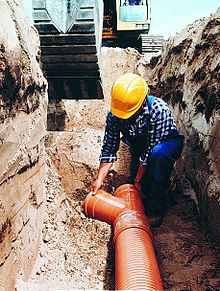
Polyvinyl chloride (PVC, commonly called "vinyl") [24] incorporates chlorine atoms. C-Cl bonds in the backbone are hydrophobic and resist oxidation (and burning). PVC is stiff, strong, heat and weather resistant, properties that make it suitable for use in devices for plumbing, gutters, house siding, enclosures for computers and other electronics gear. PVC can also be softened with chemical processing, and in this form it is now used for shrink-wrap, food packaging, and rain gear.
All PVC polymers are degraded by heat and light. When this happens, hydrogen chloride is released into the atmosphere and oxidation of the compound occurs.[25] Because hydrogen chloride readily combines with water vapor in the air to form hydrochloric acid,[26] polyvinyl chloride is not recommended for long-term archival storage of silver, photographic film or paper (mylar is preferable).[27]
Rubber
Natural rubber is an elastomer (an elastic hydrocarbon polymer) that originally was derived from latex, a milky colloidal suspension found in specialised vessels in some plants. It is useful directly in this form (indeed, the first appearance of rubber in Europe was cloth waterproofed with unvulcanized latex from Brazil). However, in 1839, Charles Goodyear invented vulcanized rubber: a form of natural rubber heated with sulfur (and a few other chemicals), forming cross-links between polymer chains (vulcanization), improving elasticity and durability. In 1851, Nelson Goodyear added fillers to natural rubber materials to form ebonite.[28]
Synthetic rubber
The first fully synthetic rubber was synthesized by Sergei Lebedev in 1910. In World War II, supply blockades of natural rubber from South East Asia caused a boom in development of synthetic rubber, notably styrene-butadiene rubber. In 1941, annual production of synthetic rubber in the US was only 231 tonnes which increased to 840,000 tonnes in 1945. In the space race and nuclear arms race, Caltech researchers experimented with using synthetic rubbers for solid fuel for rockets. Ultimately, all large military rockets and missiles would use synthetic rubber based solid fuels, and they would also play a significant part in the civilian space effort.
Additives
Additives consists of various organic or inorganic compounds which are blended into plastics to enhance performance functionality.[29] The amounts added can vary significantly; for instance as much as 70% of the weight of PVC can be plasticisers whereas pigments may account for less than 1%.[29]Many controversies associated with plastics actually relate to the additives.[30][31][29][further explanation needed]
Typical additives include:
Colorants
Plastic colorants are chemical compounds used to color plastic. Those compounds come in a form of dyes and pigments. The type of a colorant is chosen based on the type of a polymeric resin, that needs to be colored. [citation needed] Dyes are usually used with polycarbonates, polystyrene and acrylic polymers. Pigments are better suited for use with polyolefins.[32][33]
The colorant must satisfy various constraints, for example, the compound must be[34]chemically compatible with the base resin, be a suitable match with a color standard (see e.g. International Color Consortium), be chemically stable, which in this case means being able to survive the stresses and processing temperature (heat stability) in the fabrication process and be durable enough to match the life duration of the product.
The parameters of the compound vary with a desired effect, which may include the final product being pearlescent, metallic, fluorescent, phosphorescent, thermochromicor photochromic.[35]
The exact chemical formula will furthermore depend on the type of application: general purpose, food contact item, toy, packagesubject to CONEG,[36] etc.[35]
Different methods for delivering colorants in molding plastics include masterbatches(concentrates), a method which involves a concentrate being separated into resin, cube blends ("salt & pepper mixes" - dry blending) which are natural polymers, already sprayed into natural polymers, surface coating, and precolored resins, which involve using precolored materials to make manufacturing cheaper.[37][38]Fillers and Reinforcements
Despite appearing similar these additives serve different purposes. Fillers are inert low-cost materials added to the polymer to reduce cost and weight.[39] Examples include chalk, starch, cellulose, wood flour, and zinc oxide. Reinforcements may be added to strengthen the polymer against mechanical damage. Examples include adding carbon fibre to form fibre-reinforced plastic.[28]
Flame retardants
Plasticizers
Plasticizers are used to improve the flexibility and rheology of plastics and are important in making films and cable. By mass they are often the most abundant additives, [31] although this varies significantly between polymers. Around 80–90% of global production is used in PVC,[41] which may itself consist of up to 70% plasticiser by mass. Cellulose plastics, such as cellophane, also use significant amounts of plasticizers.[29] By comparison, little or no plasticizer is present in polyethylene terephthalate (PET). Phthalates remain the most common class of plasticisers, despite public concern over their potential health effects as endocrine disruptors.
Stabilizers
Polymer stabilizers are important during the forming and casting of molten plastic but also prolong the life of the polymers by suppressing polymer degradation that results from UV-light, oxidation, and other forces. Typical stabilizers thus absorb UV light or function as antioxidants.
Other classes
- Release agents
Release agents are used during the production of plastic items to prevent them sticking to the mold, for instance in injection moulding. Slip Additives are similarly used to prevent polyolefin films from adhering to metal surfaces during processing. Erucamide and oleamide are common examples.
- Biocides
Biocides are added to prevent the growth of organisms of the plastic surface. This is usually aimed at making the plastic antibacterial. The majority of biocides are added to soft PVC and foamed polyurethanes. Compounds include isothiazolinones, triclosan, arsenic and organotin compounds.
Toxicity
Pure plastics have low toxicity due to their insolubility in water, and because they have a large molecular weight, they are biochemically inert. Plastic products contain a variety of additives, however, some of which can be toxic.[42] For example, plasticizers like adipates and phthalates are often added to brittle plastics like PVC to make them pliable enough for use in food packaging, toys, and many other items. Traces of these compounds can leach out of the product. Owing to concerns over the effects of such leachates, the EU has restricted the use of DEHP (di-2-ethylhexyl phthalate) and other phthalates in some applications, and the US has limited the use of DEHP, DPB, BBP, DINP, DIDP, and DnOP in children's toys and child-care articles through the Consumer Product Safety Improvement Act. Some compounds leaching from polystyrene food containers have been proposed to interfere with hormone functions and are suspected human carcinogens (cancer-causing substances).[43] Other chemicals of potential concern include alkylphenols.[31]
While a finished plastic may be non-toxic, the monomers used in the manufacture of its parent polymers may be toxic. In some cases, small amounts of those chemicals can remain trapped in the product unless suitable processing is employed. For example, the World Health Organization's International Agency for Research on Cancer (IARC) has recognized vinyl chloride, the precursor to PVC, as a human carcinogen.[43]
Bisphenol A (BPA)
Some polymers may also decompose into monomers or other toxic substances when heated. In 2011, it was reported that "almost all plastic products" sampled released chemicals with estrogenic activity, although the researchers identified some plastics that did not.[44] The primary building block of polycarbonates, bisphenol A (BPA), is an estrogen-like endocrine disruptor that may leach into food.[43] Research in Environmental Health Perspectives finds that BPA leached from the lining of tin cans, dental sealantsand polycarbonate bottles can increase the body weight of lab animals' offspring.[45] A more recent animal study suggests that even low-level exposure to BPA results in insulin resistance, which can lead to inflammation and heart disease.[46] As of January 2010, the Los Angeles Times reported that the US Food and Drug Administration (FDA) is spending $30 million to investigate indications of BPA's link to cancer.[47] Bis(2-ethylhexyl) adipate, present in plastic wrap based on PVC, is also of concern, as are the volatile organic compounds present in new car smell. The EU has a permanent ban on the use of phthalates in toys. In 2009, the US government banned certain types of phthalates commonly used in plastic.[48]
History
The development of plastics has evolved from the use of naturally plastic materials (e.g., gums and shellac) to the use of the chemical modification of those materials (e.g., natural rubber, cellulose, collagen, and milk proteins), and finally to completely synthetic plastics (e.g., bakelite, epoxy, and PVC). Early plastics were bio-derived materials such as egg and blood proteins, which are organic polymers. In around 1600 BC, Mesoamericansused natural rubber for balls, bands, and figurines.[2] Treated cattle horns were used as windows for lanterns in the Middle Ages. Materials that mimicked the properties of horns were developed by treating milk proteins with lye. In the nineteenth century, as chemistry developed during the Industrial Revolution, many materials were reported. The development of plastics accelerated with Charles Goodyear's 1839 discovery of vulcanization to harden natural rubber.
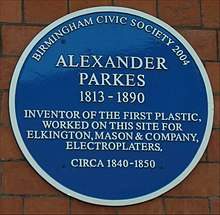
Parkesine, invented by Alexander Parkes in 1855 and patented the following year,[49] is considered the first man-made plastic. It was manufactured from cellulose (the major component of plant cell walls) treated with nitric acid as a solvent. The output of the process (commonly known as cellulose nitrate or pyroxilin) could be dissolved in alcohol and hardened into a transparent and elastic material that could be molded when heated.[50] By incorporating pigments into the product, it could be made to resemble ivory. Parkesine was unveiled at the 1862 International Exhibition in London and garnered for Parkes the bronze medal.[51]
In 1893, French chemist Auguste Trillat discovered the means to insolubilize casein(milk proteins) by immersion in formaldehyde, producing material marketed as galalith.[52]In 1897, mass-printing press owner Wilhelm Krische of Hanover, Germany, was commissioned to develop an alternative to blackboards.[52] The resultant horn-like plastic made from casein was developed in cooperation with the Austrian chemist (Friedrich) Adolph Spitteler (1846–1940). Although unsuitable for the intended purpose, other uses would be discovered.[53]
The world's first fully synthetic plastic was Bakelite, invented in New York in 1907 by Leo Baekeland,[3] who coined the term plastics.[54]Many chemists have contributed to the materials science of plastics, including Nobel laureate Hermann Staudinger, who has been called "the father of polymer chemistry," and Herman Mark, known as "the father of polymer physics."[55]
After World War I, improvements in chemistry led to an explosion of new forms of plastics, with mass production beginning in the 1940s and 1950s.[56] Among the earliest examples in the wave of new polymers were polystyrene (first produced by BASF in the 1930s)[2] and polyvinyl chloride (first created in 1872 but commercially produced in the late 1920s).[2] In 1923, Durite Plastics, Inc., was the first manufacturer of phenol-furfural resins.[57] In 1933, polyethylene was discovered by Imperial Chemical Industries (ICI) researchers Reginald Gibson and Eric Fawcett.[2]
The discovery of polyethylene terephthalate is credited to employees of the Calico Printers' Association in the UK in 1941; it was licensed to DuPont for the US and ICI otherwise, and as one of the few plastics appropriate as a replacement for glass in many circumstances, resulting in widespread use for bottles in Europe.[2] In 1954 polypropylene was discovered by Giulio Natta and began to be manufactured in 1957.[2] Also in 1954 expanded polystyrene (used for building insulation, packaging, and cups) was invented by Dow Chemical.[2]
Plastics industry
Plastics manufacturing is a major part of the chemical industry, and some of the world's largest chemical companies have been involved since the earliest days, such as the industry leaders BASF and Dow Chemical.

In 2014, sales of the top 50 companies amounted to US $961.3 billion.[58] The firms came from some 18 countries in total, with more than half of the companies on the list being headquartered in the US. Many of the top 50 plastics companies were concentrated in just three countries: the US with 12, Japan with 8, and Germany with 6. BASF was the world's largest chemical producer for the ninth year in a row. [58]
Industry standards
Many properties of plastics are determined by standards specified by the ISO, such as:
- ISO 306 – Thermoplastics
Many of the properties of plastics are determined by UL Standards, tests specified by Underwriters Laboratories (UL), such as:
- Flammability – UL94
- High voltage arc tracking rate – UL746A
- Comparative Tracking Index
Environmental effects

Because the chemical structure of most plastics renders them durable, they are resistant to many natural degradation processes. Much of this material may persist for centuries or longer, given the demonstrated persistence of structurally similar natural materials such as amber.
There are differing estimates of how much plastic waste has been produced in the last century. By one estimate, one billion tons of plastic waste have been discarded since the 1950s.[59] Others estimate a cumulative human production of 8.3 billion tons of plastic, of which 6.3 billion tons is waste, with a recycling rate of only 9%.[60]
The Ocean Conservancy reported that China, Indonesia, Philippines, Thailand, and Vietnam dump more plastic into the sea than all other countries combined.[61] The rivers Yangtze, Indus, Yellow, Hai, Nile, Ganges, Pearl, Amur, Niger, and Mekong "transport 88% to 95% of the global [plastics] load into the sea."[62][63][verify quote punctuation]
The presence of plastics, particularly microplastics, within the food chain is increasing. In the 1960s microplastics were observed in the guts of seabirds, and since then have been found in increasing concentrations. [64] The long-term effects of plastics in the food chain are poorly understood. In 2009 it was estimated that 10% of modern waste was plastic,[56] although estimates vary according to region.[64]Meanwhile, 50% to 80% of debris in marine areas is plastic.[64]
Prior to the Montreal Protocol, CFCs had been commonly used in the manufacture of the plastic polystyrene, the production of which had contributed to depletion of the ozone layer.
Microplastics

Microplastics are fragments of any type of plastic[65] less than 5 mm (0.20 in) in length, according to the U.S. National Oceanic and Atmospheric Administration (NOAA)[66][67]and the European Chemicals Agency.[68] They enter natural ecosystems from a variety of sources, including cosmetics, clothing, and industrial processes.
Two classifications of microplastics are currently recognized. Primary microplastics are any plastic fragments or particles that are already 5.0 mm in size or less before entering the environment. These include microfibers from clothing, microbeads, and plastic pellets (also known as nurdles).[69][70][71] Secondary microplastics arise from the degradation (breakdown) of larger plastic products through natural weathering processes after entering the environment. Such sources of secondary microplastics include water and soda bottles, fishing nets, plastic bags, microwave containers and tea bags.[71][72][73] Both types are recognized to persist in the environment at high levels, particularly in aquatic and marine ecosystems.[74] However, microplastics also accumulate in the air and terrestrial ecosystems. The term macroplastics is used to differentiate microplastics from larger plastic waste, such as plastic bottles.
Because plastics degrade slowly (often over hundreds to thousands of years),[75][76]microplastics have a high probability of ingestion, incorporation into, and accumulation in the bodies and tissues of many organisms. The toxic chemicals that come from both the ocean and runoff can also biomagnify up the food chain.[77][78] In terrestrial ecosystems, microplastics have been demonstrated to reduce the viability of soil ecosystems and reduce weight of earthworms.[79][80] The cycle and movement of microplastics in the environment are not fully known, but research is currently underway to investigate the phenomenon. Deep layer ocean sediment surveys in China (2020) show the presence of plastics in deposition layers far older than the invention of plastics, leading to suspected underestimation of microplastics in surface sample ocean surveys.[81][82]
Decomposition of plastics
Plastics constitute approximately 10% of discarded waste. It is well known that most common plastic do not readily biodegradable but they do none-the-less undergo polymer degradation via a variety of processes, the most significant of which is usually photo-oxidation. Depending on their chemical composition, plastics and resins have varying properties related to contaminant absorptionand adsorption. Polymers' marine degradation takes much longer as a result of the saline environment and cooling effect of the sea, contributing to the persistence of plastic debris in certain environments.[64] Recent studies have shown, however, that plastics in the ocean decompose faster than had been previously thought, due to exposure to the sun, rain, and other environmental conditions, resulting in the release of toxic chemicals such as bisphenol A. However, due to the increased volume of plastics in the ocean, decomposition has slowed down.[83] The Marine Conservancy has predicted the decomposition rates of several plastic products: It is estimated that a foam plastic cup will take 50 years, a plastic beverage holder will take 400 years, a disposable diaper will take 450 years, and fishing line will take 600 years to degrade.[84]
Microbial species capable of degrading plastics are known to science, some of which are potentially useful for disposal of certain classes of plastic waste.
- In 1975, a team of Japanese scientists studying ponds containing waste water from a nylon factory discovered a strain of Flavobacterium that digests certain byproducts of nylon 6 manufacture, such as the linear dimer of 6-aminohexanoate.[85]Nylon 4 (polybutyrolactam) can be degraded by the ND-10 and ND-11 strands of Pseudomonas sp. found in sludge, resulting in GABA (γ-aminobutyric acid) as a byproduct.[86]
- Several species of soil fungi can consume polyurethane,[87] including two species of the Ecuadorian fungus Pestalotiopsis. They can consume polyurethane both aerobically and anaerobically (such as at the bottom of landfills).[88]
- Methanogenic microbial consortia degrade styrene, using it as a carbon source.[89]Pseudomonas putida can convert styreneoil into various biodegradable plastic|biodegradable polyhydroxyalkanoates.[90][91]
- Microbial communities isolated from soil samples mixed with starch have been shown to be capable of degrading polypropylene.[92]
- The fungus Aspergillus fumigatuseffectively degrades plasticized PVC.[93]Phanerochaete chrysosporium has been grown on PVC in a mineral salt agar.[94] P. chrysosporium, Lentinus tigrinus, A. niger, and A. sydowii can also effectively degrade PVC.[95]
- Phenol-formaldehyde, commonly known as Bakelite, is degraded by the white rot fungus P. chrysosporium.[96]
- Acinetobacter has been found to partially degrade low-molecular-weight polyethylene oligomers.[86] When used in combination, Pseudomonas fluorescens and Sphingomonas can degrade over 40% of the weight of plastic bags in less than three months.[97] The thermophilic bacterium Brevibacillus borstelensis (strain 707) was isolated from a soil sample and found capable of using low-density polyethyleneas a sole carbon source when incubated at 50°C. Pre-exposure of the plastic to ultraviolet radiation broke chemical bonds and aided biodegradation; the longer the period of UV exposure, the greater the promotion of the degradation.[98]
- Hazardous molds have been found aboard space stations that degrade rubber into a digestible form.[99]
- Several species of yeasts, bacteria, algae and lichens have been found growing on synthetic polymer artifacts in museums and at archaeological sites.[100]
- In the plastic-polluted waters of the Sargasso Sea, bacteria have been found that consume various types of plastic; however, it is unknown to what extent these bacteria effectively clean up poisons rather than simply release them into the marine microbial ecosystem.
- Plastic-eating microbes also have been found in landfills.[101]
- Nocardia can degrade PET with an esterase enzyme.[citation needed]
- The fungus Geotrichum candidum, found in Belize, has been found to consume the polycarbonate plastic found in CDs.[102][103]
- Futuro houses are made of fiberglass-reinforced polyesters, polyester-polyurethane, and PMMA. One such house was found to be harmfully degraded by Cyanobacteria and Archaea.[104][105]
Recycling
Plastic recycling is the process of recovering scrap or waste plastic and reprocessing the material into useful products. Due to purposefully misleading symbols on plastic packaging and numerous technical hurdles, less than 10% of plastic has ever been recycled.[106][107] Compared with the lucrative recycling of metal, and similar to the low value of glass recycling, plastic polymers recycling is often more challenging because of low density and low value.
Materials recovery facilities are responsible for sorting and processing plastics. As of 2019, due to limitations in their economic viability, these facilities have struggled to make a meaningful contribution to the plastic supply chain.[108] The plastics industry has known since at least the 1970s that recycling of most plastics is unlikely because of these limitations. However, the industry has lobbied for the expansion of recycling while these companies have continued to increase the amount of virgin plastic being produced.[109][110]
When different types of plastics are melted together, they tend to phase-separate, like oil and water, and set in these layers. The phase boundaries cause structural weakness in the resulting material, meaning that polymer blends are useful in only limited applications. This is in part why the plastics industry has developed the resin identification codes. The two most widely manufactured plastics, polypropylene and polyethylene, behave this way, which limits their utility for recycling. Each time plastic is recycled, additional virgin materials must be added to help improve the integrity of the material. Therefore, even recycled plastic has new plastic material added in. Moreover, the same piece of plastic can only be recycled about 2–3 times.[111]Thus, even when plastics have a resin code, or are collected for recycling, only a small portion of that material is actually recycled. For example, as of 2017, only 8% of US plastic was recycled.[112]
Since almost all plastic is non-biodegradable, recycling can be part of reducing plastic in the waste stream. This is important, for example, for reducing the approximately 8 million metric tons of waste plastic that enters the Earth's ocean every year.[113][114] However, because of the complexity of recycling, a substantial amount of plastic that is collected for recycling is processed in other ways, such as through trash incineration, or not processed at all.Climate change
In 2019, the Center for International Environmental Law published a new report on the impact of plastic on climate change. According to the report, plastic will contribute greenhouse gases in the equivalent of 850 million tons of carbon dioxide (CO2) to the atmosphere in 2019. If current trends continue, annual emissions will grow to 1.34 billion tons by 2030. By 2050, plastic could emit 56 billion tons of greenhouse gas emissions, as much as 14% of the earth's remaining carbon budget.[115]
The effect of plastics on global warming is mixed. Plastics are generally made from petroleum. If the plastic is incinerated, it increases carbon emissions; if it is placed in a landfill, it becomes a carbon sink,[116]although biodegradable plastics have caused methane emissions.[117] Due to the lightness of plastic versus glass or metal, plastic may reduce energy consumption. For example, packaging beverages in PET plastic rather than glass or metal is estimated to save 52% in transportation energy.[2]
Production of plastics
Production of plastics from crude oil requires 7.9 to 13.7 kWh/lb (taking into account the average efficiency of US utility stations of 35%). Producing silicon and semiconductors for modern electronic equipment is even more energy consuming: 29.2 to 29.8 kWh/lb for silicon, and about 381 kWh/lb for semiconductors.[118] This is much higher than the energy needed to produce many other materials. For example, to produce iron (from iron ore) requires 2.5-3.2 kWh/lb of energy; glass (from sand, etc.) 2.3–4.4 kWh/lb; steel (from iron) 2.5–6.4 kWh/lb; and paper (from timber) 3.2–6.4 kWh/lb.[119]
Incineration of plastics
Controlled high-temperature incineration, above 850°C for two seconds,[citation needed]performed with selective additional heating, breaks down toxic dioxins and furans from burning plastic, and is widely used in municipal solid waste incineration. Municipal solid waste incinerators also normally include flue gas treatments to reduce pollutants further. This is needed because uncontrolled incineration of plastic produces polychlorinated dibenzo-p-dioxins, a carcinogen (cancer causing chemical). The problem occurs because the heat content of the waste stream varies.[120] Open-air burning of plastic occurs at lower temperatures, and normally releases such toxic fumes.
Pyrolytic disposal
Plastics can be pyrolyzed into hydrocarbonfuels, since plastics include hydrogen and carbon. One kilogram of waste plastic produces roughly a liter of hydrocarbon.[121]..
| This article uses material from the Wikipedia article Metasyntactic variable, which is released under the Creative Commons Attribution-ShareAlike 3.0 Unported License. |